Penetration Testing Services – Identify & Eliminate Cybersecurity Risks

Why Penetration Testing Is Essential

With cyberattacks increasing in frequency and sophistication, traditional security measures are no longer enough. Penetration testing (pen testing) proactively finds weaknesses in your IT infrastructure, helping you:

Detect vulnerabilities before hackers exploit them

Reduce business risk with targeted remediation

Meet compliance requirements for ISO 27001, PCI DSS, GDPR, and other standards

Build trust with customers, partners, and stakeholders

Our Penetration Testing Services

Network Penetration Testing

Simulate attacks on your internal and external networks to identify exploitable weaknesses in firewalls, servers, and connected devices.

Web Application Penetration Testing

Test websites, web applications, and APIs for vulnerabilities such as SQL injection, XSS, and authentication flaws.

Cloud Penetration Testing

Assess the security of your cloud environments, ensuring configurations and permissions are set correctly to prevent unauthorised access.

Wireless Network Security Testing

Find weaknesses in your Wi-Fi security protocols and encryption methods.

Social Engineering Tests

Evaluate your organisation’s human defences with simulated phishing and other social engineering attacks.
Our Proven Penetration Testing Process

1.

Scoping & Planning

Define objectives, scope, and test boundaries

2.

Reconnaissance

Gather information about the target environment

3.

Vulnerability Analysis

Identify potential security gaps and assess potential business risks

4.

Reporting

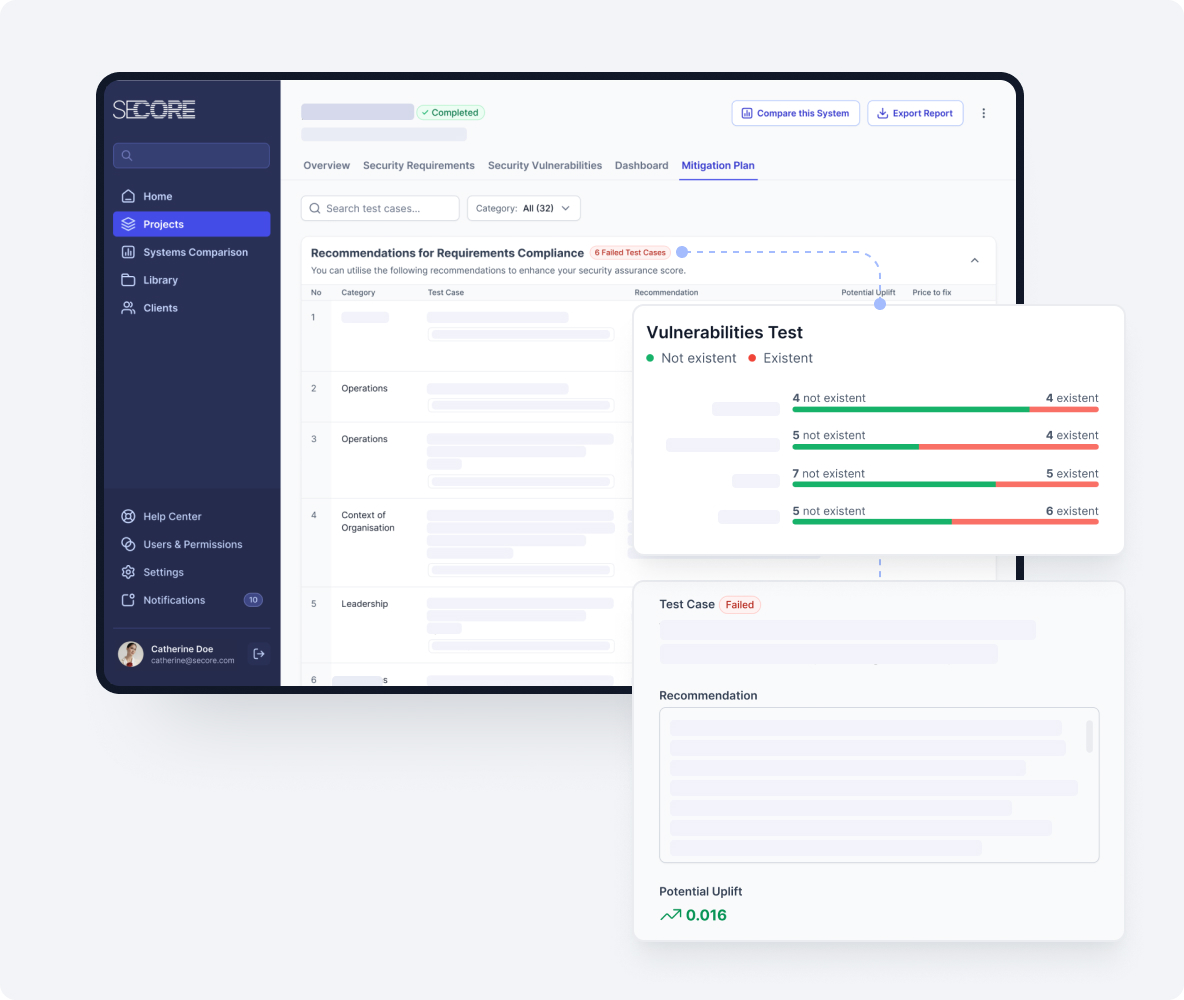
Provide clear, detailed, and prioritised recommendations

Why Choose SeCore for Penetration Testing?

Customised Testing aligned to your industry and compliance needs

Comprehensive Reports with executive summaries and technical details

Global Service Delivery for organisations of all sizes

Ongoing Support including re-testing and continuous vulnerability management

OUTCOME

What You Get

After your penetration test, you will receive:

An executive summary for decision-makers

A technical report with step-by-step remediation advice

Risk prioritisation to focus on critical issues

Free Post Assessment Consultation

FAQ

Penetration testing is a security practice where authorised testers simulate cyberattacks on a system, network, or application to find and fix vulnerabilities before real attackers exploit them.

Penetration testing is essential for your business because it helps you find vulnerabilities before attackers can exploit them, reduces the risk of data breaches, protects customer trust, supports compliance requirements, and strengthens your overall security posture.

A vulnerability scan automatically checks systems for known weaknesses, while a penetration test goes further by manually exploiting those weaknesses to see what an attacker could actually do.

Penetration testing can be performed on many types of systems, including websites and web applications, mobile apps, networks and servers, cloud environments, APIs, wireless networks, IoT devices, and even physical security controls.

Common industry-standard penetration testing methodologies include OSSTMM, OWASP, NIST SP 800-115, CREST, and CHECK.

Typical stages of a penetration test include defining the scope and objectives, gathering information through reconnaissance, scanning to identify vulnerabilities, exploiting those weaknesses to understand their real impact, performing post-exploitation to assess access and persistence, and finally producing a detailed report with findings and remediation guidance.

After a penetration test, you receive a report detailing the vulnerabilities and how to fix them, your team applies the fixes, and a re-test may follow to confirm everything is resolved.

Penetration tests should be performed at least annually, also whenever you make significant changes to your systems, applications, or infrastructure.

A penetration test typically takes anywhere from a few days to a couple of weeks, depending on the size and complexity of the systems being tested.

Yes, pentests can be performed remotely, as most systems and applications can be securely accessed and tested without the tester being on-site.

You should look for a penetration testing provider with recognised certifications such as CREST, CHECK, OSCP, or similar, proven experience in the type of testing you need, strong reporting skills, and a solid track record of working with organisations in your sector.

SeCore identifies and eliminates cybersecurity risks by performing expert penetration testing, revealing real vulnerabilities, explaining their impact, and giving clear remediation guidance to strengthen your overall security.

SeCore provides certified penetration testing solutions to uncover real vulnerabilities and security assurance services that assess your systems and recommend effective mitigation to support compliance.

SeCore brings experienced, certified pentesters, strong technical knowledge across modern attack techniques, and a structured methodology that delivers clear findings, realistic exploitation insights, and practical guidance for improving your security.

After a SeCore penetration test, you can expect a clear, professional report detailing the vulnerabilities found, how they were exploited, their business impact, and the recommended steps to fix them, along with optional re-testing to confirm the issues have been fully resolved.

Get Started with Penetration Testing Today

Cyber threats are relentless but with SeCore’s penetration testing services, you can stay one step ahead. Protect your organisation, secure your data, and meet compliance requirements with expert-led, tailored security testing.
Contact SeCore today to book your penetration test and safeguard your business.

Get in Touch