Cloud infrastructure has become central to how organisations deploy applications, store information and deliver digital services. Platforms such as AWS, Microsoft Azure and Google Cloud allow resources to be created quickly and scaled as business requirements change.
That flexibility also changes the security landscape.
Cloud environments depend heavily on identity, permissions, configuration and interconnected services. A single exposed credential, excessive permission or misconfigured resource can create an attack path across systems that may otherwise appear secure.
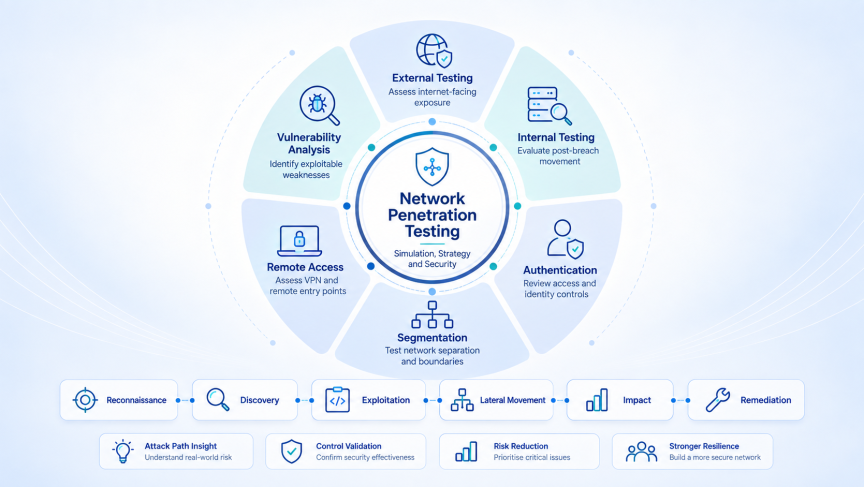
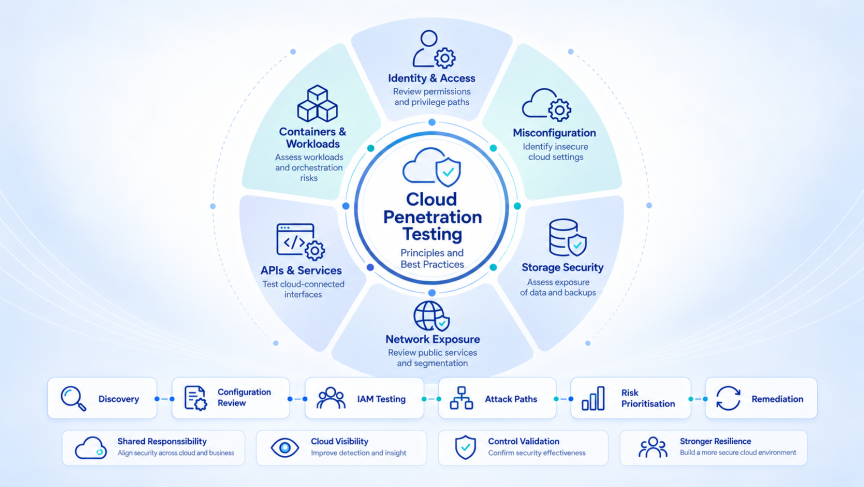
Cloud Penetration Testing is an authorised security assessment that simulates realistic attacks against cloud environments to identify exploitable weaknesses and determine what an attacker could achieve.
Effective testing goes beyond identifying configuration issues. It examines how vulnerabilities, identities and permissions can be combined, which resources could be reached and what the resulting business impact could be.
What Is Cloud Penetration Testing?
Cloud penetration testing is a controlled assessment of security weaknesses within cloud-hosted infrastructure, applications and services.
Testing may include:
- Virtual machines
- Cloud networks
- Identity and access management
- Storage
- Databases
- APIs
- Serverless services
- Containers
- Kubernetes environments
- Cloud applications
- Secrets and credentials
- Deployment pipelines
The objective is to determine whether an attacker could exploit weaknesses to gain unauthorised access, increase privileges, access sensitive information or move between cloud resources.
As with any penetration test, the assessment must operate within an agreed and authorised scope.
Why Cloud Security Requires a Different Approach
Traditional penetration testing often focuses heavily on networks, servers and applications.
Cloud environments introduce additional security considerations.
Resources can be:
- Created automatically
- Removed quickly
- Distributed across multiple regions
- Managed through APIs
- Connected through identity relationships
- Shared between different accounts
- Deployed through Infrastructure-as-Code
The security perimeter is therefore no longer defined simply by a firewall.
Identity and permissions often become just as important as network location.
An attacker who compromises one cloud identity may be able to access several services without exploiting another traditional software vulnerability.
The Shared Responsibility Model
Cloud security operates through shared responsibility between the cloud provider and the customer.
The provider is responsible for protecting the infrastructure and services under its control.
The customer remains responsible for how those services are configured and used.
Customer responsibilities commonly include:
- User identities
- Permissions
- Applications
- Data
- Cloud configuration
- Network rules
- Secrets
- Workload security
The exact division changes depending on whether the organisation uses Infrastructure as a Service, Platform as a Service or Software as a Service.
Cloud penetration testing should therefore focus on areas the organisation controls and is authorised to assess.
Using a secure cloud provider does not automatically mean the organisation’s own cloud environment is secure.
Infrastructure, Platform and Software as a Service
The testing scope also depends on the type of cloud service being used.
Infrastructure as a Service
Infrastructure as a Service gives customers significant control over computing resources.
Security responsibilities may include:
- Virtual machines
- Operating systems
- Network configuration
- Applications
- User access
- Data
Testing can therefore cover a broad range of infrastructure and configuration weaknesses.
Platform as a Service
Platform as a Service removes much of the responsibility for managing underlying infrastructure.
The customer still controls areas such as:
- Applications
- Data
- Identities
- Permissions
- APIs
- Application configuration
Testing therefore concentrates more heavily on how the organisation has configured and used the platform.
Software as a Service
Software as a Service places more responsibility with the provider.
Customers may still control:
- User accounts
- Authentication
- Permissions
- Information sharing
- Integrations
- Data configuration
Testing must remain within functionality the customer is authorised to assess.
Scoping and Authorisation
Cloud penetration testing requires particularly careful scoping.
Cloud platforms can contain infrastructure shared across multiple customers, so testing must not affect resources outside the organisation’s control.
Before testing begins, the scope should identify:
- Cloud accounts
- Subscriptions
- Projects
- Systems
- Applications
- Services
- Testing techniques
- Excluded resources
- Production restrictions
The relevant cloud provider’s penetration-testing rules should also be reviewed before the assessment begins.
Testing activity that is acceptable in one environment should not automatically be assumed to be permitted in another.
Cloud Asset Discovery
An effective assessment begins with understanding what exists.
Cloud environments can grow quickly, making asset visibility difficult.
The tester may identify:
- Public endpoints
- Virtual machines
- Storage
- Databases
- Containers
- Serverless functions
- APIs
- Identity services
- Cloud applications
- Network resources
Unused or forgotten resources can still create security exposure.
Accurate asset discovery therefore provides the foundation for the wider assessment.
Cloud Configuration Assessment
Many cloud security weaknesses result from configuration rather than software vulnerabilities.
Common areas include:
- Publicly exposed resources
- Excessive permissions
- Weak network rules
- Insecure storage
- Missing authentication controls
- Exposed administrative services
- Poorly protected credentials
- Overly permissive security groups
Automated tools can identify potential weaknesses, but manual analysis is important for understanding whether those findings create realistic attack paths.
Identity and Access Management Testing
Identity is one of the most important areas of cloud penetration testing.
Cloud environments often depend on complex relationships between:
- Users
- Groups
- Roles
- Service accounts
- Applications
- APIs
- Machine identities
Testing may assess whether permissions are greater than required.
For example, a low-privileged identity may have permission to assume another role, access a secret or modify a service that eventually provides administrative access.
Individually, these permissions may not appear critical.
Combined together, they may create a serious privilege-escalation path.
Privilege Escalation
Privilege escalation occurs when an attacker with limited access is able to obtain greater control.
In cloud environments, this may involve:
- Over-privileged roles
- Weak service accounts
- Misconfigured trust relationships
- Exposed secrets
- Insecure permission policies
- Excessive API permissions
The objective of testing is to establish whether a limited compromise can develop into wider control of the cloud environment.
Cloud Network Security
Although cloud environments depend heavily on identity, network security remains important.
Testing may examine:
- Virtual networks
- Subnets
- Security groups
- Firewall rules
- Access-control lists
- Public endpoints
- Private endpoints
- Administrative services
The assessment should determine whether systems are unnecessarily exposed and whether segmentation prevents unauthorised movement.
Storage Security
Cloud storage can contain large volumes of sensitive information.
Security testing may identify:
- Publicly accessible storage
- Excessive permissions
- Weak access policies
- Insecure sharing
- Exposed backups
- Weak separation between environments
Storage should only be accessible to users and services that genuinely require it.
API Security
Modern cloud environments depend heavily on APIs.
Testing may assess:
- Authentication
- Authorisation
- Permission boundaries
- Input handling
- Data exposure
- Rate controls
- Machine-to-machine access
An insecure API can provide attackers with direct access to cloud functionality even when the underlying infrastructure is otherwise well protected.
Containers and Kubernetes
Containers and orchestration platforms create additional attack surfaces.
Testing may examine:
- Container privileges
- Cluster configuration
- Service accounts
- Secrets
- Network policies
- Administrative interfaces
- Workload isolation
A compromise within one workload should not automatically allow an attacker to control the wider cluster or underlying infrastructure.
Secrets and Credentials
Cloud environments often contain credentials used by applications, administrators and automated services.
Testing may identify secrets stored within:
- Configuration files
- Source code
- Environment variables
- Deployment pipelines
- Containers
- Cloud storage
- Infrastructure templates
A compromised secret can sometimes provide more valuable access than exploiting the original system in which it was discovered.
Secrets should therefore be tightly controlled, rotated appropriately and granted only the permissions required.
Infrastructure-as-Code
Many organisations now create cloud environments through Infrastructure-as-Code.
This can improve consistency, but it can also reproduce insecure configurations automatically.
Security assessments may therefore review:
- Permission definitions
- Network settings
- Storage configuration
- Secrets
- Deployment templates
- Administrative access
Finding weaknesses before infrastructure is deployed can prevent the same vulnerability from being reproduced across multiple environments.
Deployment Pipelines
Cloud security also extends into development and deployment processes.
If a deployment pipeline is compromised, an attacker may be able to modify applications or infrastructure before they reach production.
Testing may consider:
- Build permissions
- Credentials
- Deployment access
- Secrets
- Repository permissions
- Automation accounts
Development environments should not be treated as disconnected from production security.
Attack Path Analysis
Individual cloud weaknesses may appear relatively minor until they are combined.
For example, an attacker could:
- Compromise a public-facing application
- Obtain a cloud credential
- Access a storage service
- Discover additional secrets
- Assume a more privileged identity
- Reach sensitive workloads
Attack-path analysis demonstrates how separate vulnerabilities can combine into a larger compromise.
This often provides more meaningful insight than evaluating every finding independently.
Assessing Business Impact
Technical severity should be considered alongside business context.
Testing should assess whether successful exploitation could lead to:
- Exposure of sensitive information
- Compromise of customer environments
- Administrative control
- Service disruption
- Modification of infrastructure
- Access to backups
- Compromise of development systems
- Increased cloud costs
Understanding business impact helps organisations determine which findings require the most urgent remediation.
Reporting and Remediation
Cloud penetration-testing reports should explain:
- What was tested
- Which weaknesses were confirmed
- How vulnerabilities were exploited
- Which attack paths were demonstrated
- What business impact could result
- Which actions should be prioritised
Remediation may include:
- Reducing permissions
- Restricting public access
- Correcting network rules
- Rotating credentials
- Updating workloads
- Strengthening authentication
- Improving segmentation
- Removing unnecessary resources
Findings should be prioritised according to actual risk rather than technical severity alone.
Retesting
Significant vulnerabilities should be retested after remediation.
This confirms whether:
- The original weakness has been removed
- Permissions have been corrected
- Exposure has been reduced
- The attack path is no longer available
Verification turns remediation activity into evidence of risk reduction.
Cloud Penetration Testing and Security Assurance
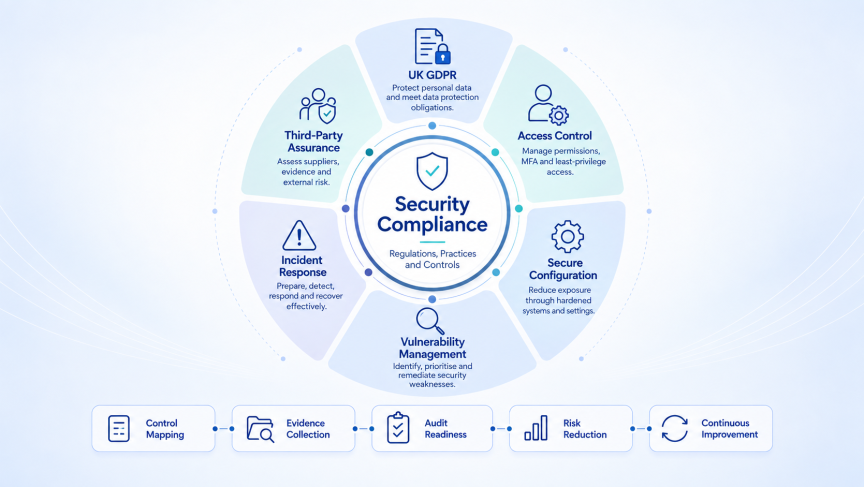
Cloud penetration testing can provide valuable evidence within a wider security-assurance programme.
Organisations may need to demonstrate that they are:
- Assessing cloud risks
- Testing security controls
- Managing vulnerabilities
- Restricting access
- Protecting sensitive information
- Addressing identified weaknesses
Testing can support wider requirements associated with recognised security frameworks, customer assurance and compliance.
However, a penetration test is still a point-in-time assessment.
It should not be treated as permanent evidence that a cloud environment remains secure.
How Often Should Cloud Environments Be Tested?
There is no single testing frequency appropriate for every environment.
Additional testing may be appropriate following:
- Major cloud migrations
- Significant architecture changes
- New public-facing services
- Changes to identity systems
- Major application releases
- New cloud integrations
- Serious security incidents
Frequently changing or high-risk environments may require more regular assessment.
Automated security tools can provide ongoing visibility between formal penetration tests, while human-led testing provides deeper validation of complex attack paths.
Building Greater Cloud Resilience
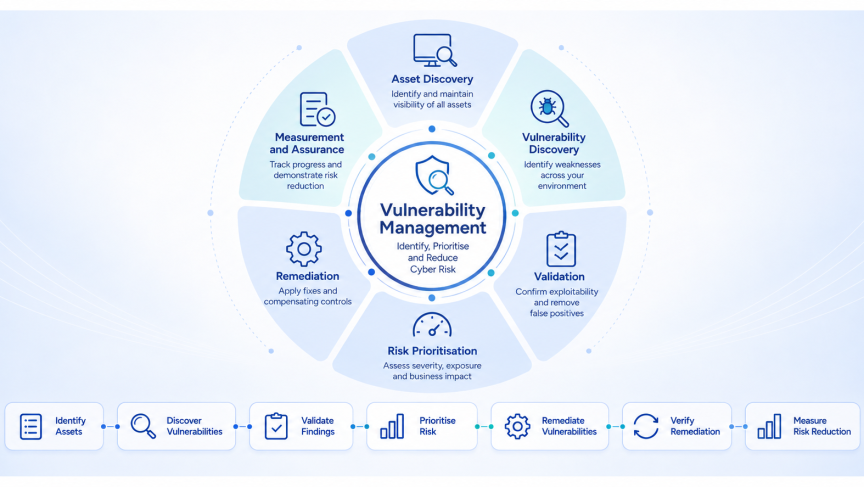
Cloud penetration testing provides organisations with a controlled way to understand how weaknesses across identities, permissions, applications, networks and cloud services could be exploited in practice.
Effective testing should reflect the shared responsibility model, remain within clearly authorised boundaries and focus on realistic attack paths rather than isolated technical findings. The strongest assessments connect vulnerabilities with business impact so that remediation can be prioritised according to genuine risk.
Cloud environments also change rapidly. Penetration testing should therefore complement vulnerability management, secure configuration, identity governance, monitoring and regular control validation rather than being treated as a one-off security exercise.
SeCore’s Penetration Testing services help organisations assess cloud environments, validate exploitable weaknesses and understand realistic attack paths. By connecting penetration-testing findings with wider security assurance and risk prioritisation, organisations can strengthen cloud resilience and gain clearer evidence of how effectively their controls are reducing exposure.